Rig
Pioke (also used for spiny dogfish), Makō, Mangō (also a general word for shark), Pīokeoke
Mustelus lenticulatusAlso known as Rig shark, Lemonfish, Spotted dogfish, Smoothhound, Spotted smoothhound, Gummy shark, lemon fish
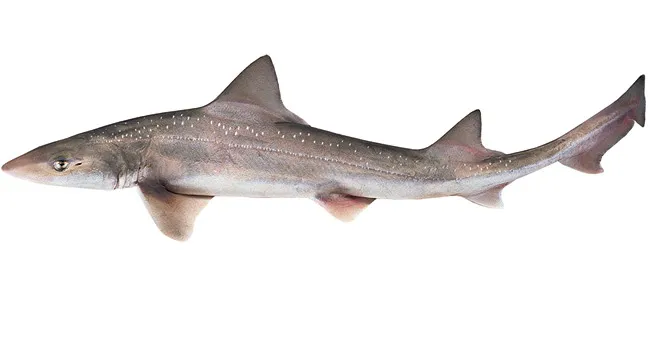
Rig (pioke) is a small, slender shark found only in New Zealand. Adults crowd into harbours, estuaries and shallow bays in spring and summer. Look for a bronze to grey back covered in small white spots, and no spines in front of the two dorsal fins. Sold as lemonfish, it is a fish and chip shop favourite.
How to identify rig
- A small, long and slender shark with a white belly. Females grow much bigger than males.
- Bronze, golden-brown or grey above, with many small white (sometimes bluish) spots over the back and along the lateral line.
- No spines in front of either dorsal fin. Run a finger along the front edge of each fin to check.
- Flat, pavement-like teeth that form grinding plates, not sharp cutting teeth.
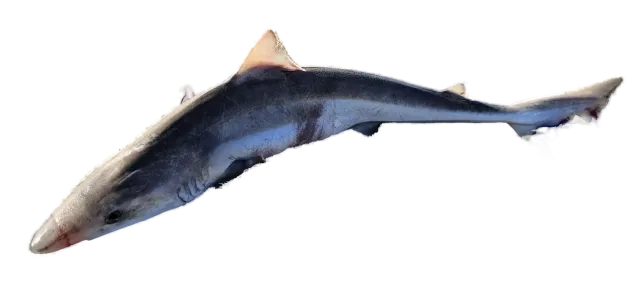
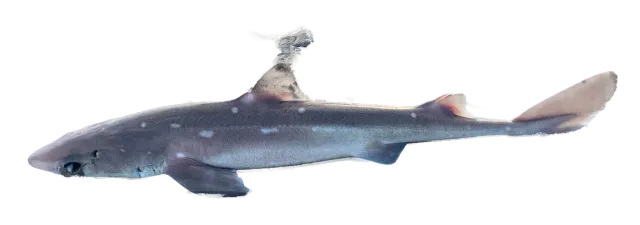
Rig are small, long, slender sharks with a white belly. The back is pale golden-brown, bronze or grey, and is covered in many small white spots, some with a bluish tinge, that also run along the lateral line. Females grow much bigger than males.
Two features settle it. First, rig have no spines in front of the dorsal fins, while spiny dogfish have a sharp spine in front of each one. Second, the teeth are flat and set like paving stones to form grinding plates, built for crushing crabs and other animals that burrow in the seabed. School shark, the other common inshore shark, have small, sharp, pointed teeth and no white spots.
Often confused with
- Spiny dogfish
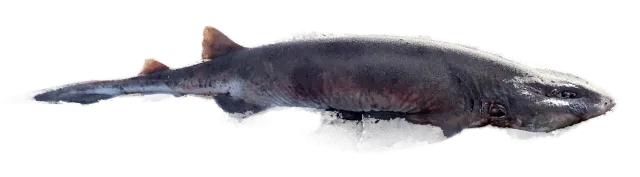
Spiny dogfish have a sharp spine in front of each dorsal fin and fewer, larger, irregular white spots. Rig have no fin spines and many small spots. Handle spiny dogfish with care, as the spines can cut.
- School shark (tope)
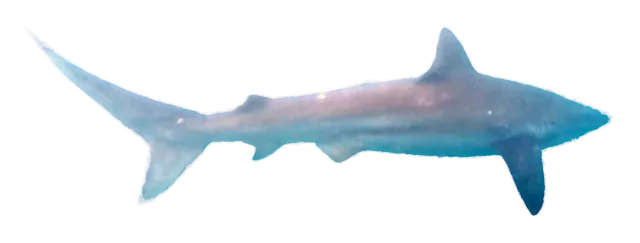
School shark are plain pale brownish-grey with no white spots, a pointed nose, a notched tail that looks doubled, and small, sharp teeth. Rig are spotted and have flat, crushing teeth.
Size and daily limits
Daily limit2–5 a dayNo species limit in Auckland and Kermadec, Central, and Challenger.Limits for each area
| Area | Min. size | Daily limit |
|---|---|---|
| Auckland and Kermadec area | None | No species limit (combined 20 a day) |
| Central area | None | No species limit (combined 20 a day) |
| Challenger area | None | No species limit (combined 20 a day) |
| Kaikōura area | None | 3 |
| South-East area | None | 5 Lyttelton Harbour/Whakaraupō: 5; Rāpaki: no take. |
| Fiordland area (Fiordland Marine Area) | None | 2 2 per day both outside and inside the Fiords. |
| Southland area | None | 5 |
Within combined finfish daily limit.
Checked 22 October 2026 · Source: MPI. Rules change, so check the NZ Fishing Rules app before you keep a fish.
Where it lives in New Zealand
Rig live only in New Zealand and are found around the North and South Islands, close to the seabed in estuaries and coastal waters. They range from the shore to about 400 m but are usually shallower than 200 m. Adults move into broad, shallow bays and harbours in spring and summer, when females give birth and mate, and head back to deeper water in autumn and winter.
Harbours are the nurseries. NIWA ranks Kaipara and Raglan harbours as the most important, followed by the Waitematā, Tāmaki, Manukau, Tauranga and Porirua harbours, with juveniles most common over muddy bottoms in the murky parts of harbours where fresh water comes in. Pups are born at 25–30 cm, grow fast through their first summer and leave the harbours in autumn at about 50 cm and 6–8 months old. Scientists think adults return to the area where they were born.
Rig travel a long way. In tagging studies more than half the fish recaptured had moved over 50 km, and more than half the females over 200 km. One tagged female moved at least 1,160 km. Females travel further than males.
- Jan: good
- Feb: good
- Mar: quieter
- Apr: quieter
- May: quieter
- Jun: quieter
- Jul: quieter
- Aug: quieter
- Sep: good
- Oct: good
- Nov: good
- Dec: good
How to catch it
Surfcasting and harbour fishing with crab: rig are a good target from land. In the 2022–23 national survey about half the rig kept were caught from the shore, a much bigger share than for most fish. They feed mainly on crabs, which they crush with their flat teeth, so paddle crab is the standard bait. Crayfish and tuatua also work. Fish the bait on the bottom off surf beaches, in harbour channels and over shallow sand and mud flats, in spring and summer when rig come inshore. A surfcasting rig with a grapnel sinker holds the bait in the surf, and a running sinker rig suits harbour channels and calmer water. Paddle crab is soft, so tie it on with bait elastic. See the bait guide for more on crab baits.
From a boat: anchor in shallow bays and harbour channels, on the edges of sand and mud flats, and fish crab or other fresh baits on the bottom.
Longlines: some rig are caught on kontiki and drone longlines set from the beach, about one in six of those kept in the 2022–23 survey. Longline rules are strict, so check them for your area before you set a line. See drone and longline rigs.
Many of the rig in harbours over summer are pregnant females or young fish. If you don't need them, release them quickly and keep them in the water while you unhook them.
Eating
Rig is good eating. The flesh is firm, white and boneless, with a low oil content, and it does not flake apart easily. That is why fish and chip shops sell it as lemonfish: it holds together in batter and in the fryer. It also suits pan frying, crumbing and curries.
Sharks need different handling from bony fish. They keep urea in their blood and flesh, and after death it breaks down into ammonia, which gives the meat a strong smell and taste. The FAO's advice is to bleed the shark as soon as it is caught and wash the carcass well with seawater, then ice it. Bleed it and put it in an ice slurry straight away, and gut it and skin it promptly. Soaking the fillets in a weak acid, such as lemon juice or vinegar, can remove up to 90% of the urea.
Like all sharks, rig have a skeleton of cartilage, so the fillets have no bones. Fillet along the backbone, then remove the tough skin. Our filleting guide covers the basics.
Bleed a rig the moment it's landed and get it on ice. Leave it lying around warm and it'll smell of ammonia by the time you get home.
Recipes
- Crispy battered fish and vegetable chips (NZ Woman's Weekly)
- Green fish curry (Seafood New Zealand)
Good to know
Rig is the shark New Zealand recreational fishers catch most often. Recreational fishers kept an estimated 14,861 rig in the year to September 2023, weighing about 37 tonnes, an average of about 2.5 kg each. That is 58% fewer than in 2017–18 and less than a third of the 2011–12 estimate. About half came from the shore and most of the rest from trailer boats, and the biggest share, about 4 in 10, was caught in the Challenger area (Nelson, Marlborough and the South Island west coast). Most were caught on rod and line, and about one in six on longlines.
Rig entered the Quota Management System on 1 October 1986 and are managed as five main stocks. Commercial fishers take them mainly by set net and as bycatch in bottom trawls. In the latest assessments the central east coast stock (SPO 2) was very likely at or above its target level, the east coast South Island, Foveaux Strait and west coast South Island stocks were about as likely as not to be at target, and the status of the North Island stock (SPO 1) was unknown. Many set net closures, brought in to protect Hector's and Māui dolphins and rig nursery grounds, also limit where rig can be netted.
Rig grow slowly and breed late. Off the South Island, males mature at 5–6 years (about 85 cm) and females at 7–8 years (about 100 cm). In the Hauraki Gulf they mature younger and smaller. Females carry their young for 10–11 months and give birth to live pups each spring or summer, from 2 to 37 at a time (about 11 on average), with bigger mothers having more. Most start a new pregnancy straight away, so they breed every year. A male tagged as an adult was recaptured nearly 14 years later, which suggests rig live 20 years or more.
Females reach an average maximum length of 151 cm and males 126 cm. Using the Fisheries New Zealand length-to-weight formulas, a rig of 80 cm weighs about 2 kg, 100 cm about 4 kg and 120 cm about 7–8 kg.
Māori once caught large numbers of "dogfish", probably including a lot of rig, on annual fishing expeditions, sun-drying thousands on wooden frames. Rig are still taken in small numbers for customary use, especially in the Auckland harbours.
Questions
What is lemonfish?
Lemonfish is the trade name for rig, a small shark found only in New Zealand. It is a fish and chip shop favourite because the firm, white, boneless flesh holds together well when battered and deep fried.
Is rig shark good eating?
Yes. Rig has firm, white, boneless flesh with a low oil content that does not flake easily. It is best battered and deep fried, and also suits pan frying, crumbing and curries. Bleed and ice it straight after catching it so the flesh doesn't take on an ammonia taste.
Why does shark meat smell of ammonia, and how do you stop it?
Sharks keep urea in their blood and flesh, and after death it breaks down into ammonia. Bleed the rig as soon as it is landed, wash it with seawater and put it on ice or in an ice slurry. Soaking the fillets in lemon juice or vinegar removes most of the remaining urea.
What is the best bait for rig?
Crab. Rig feed mainly on crabs, which they crush with flat, plate-like teeth, so paddle crab is the standard bait. Crayfish and tuatua also work. Fish the bait on the bottom off surf beaches, in harbour channels and over shallow flats in spring and summer.
How many rig can I take?
Limits for rig vary by area, and in some areas rig count towards the combined daily limit for finfish. See the size and daily limits table on this page, or the rules checker, for the current rules where you fish.
What is the Māori name for rig?
Te Aka Māori Dictionary gives pioke, pīokeoke, makō and mangō for rig. Fisheries New Zealand uses pioke and makō in its rig stock reports. Mangō is also a general word for shark, and pioke is also used for spiny dogfish.